
CASE STUDY · INSPECTION + INFRASTRUCTURE
Remote Steam Tunnel Inspection
Locating a suspected steam leak using remote visual inspection and ultrasonic acoustic imaging.
When physical access to a utility tunnel wasn't possible, WCDO used remote inspection technology to investigate infrastructure conditions and help narrow the likely source of a suspected steam leak.
Client
ENFRA Solutions
Year
2026
Project Snapshot
WCDO was brought in to provide actionable visibility inside a utility tunnel that could not be physically accessed by personnel. The inspection focused on documenting pipe and support conditions, identifying areas of concern, and gathering evidence to help guide subsequent investigation and repair.
-
Tunnel geometry and confined-space conditions prevented personnel from physically entering the space. Working within a scheduled shutdown and limited repressurization window, WCDO needed to provide visibility into the infrastructure and help identify areas requiring further investigation.
-
WCDO combined remote visual inspection with ultrasonic acoustic imaging.
Video inspection documented pipe conditions, structural supports, corrosion and moisture throughout the accessible tunnel. During repressurization, acoustic imaging provided an additional way to investigate potential pressurized steam leakage.
-
Remote imagery identified a longitudinal crack approximately 24–25 feet from the tunnel entrance, surrounded by corrosion, mineral deposits and moisture staining. The inspection also documented widespread corrosion, degraded pipe supports and persistent moisture conditions.
During repressurization, acoustic imaging detected a localized ultrasonic hotspot within the same general section where visual cracking and corrosion had been observed. Based on the combined evidence, the report identified the area as a likely leak source requiring further investigation or repair.
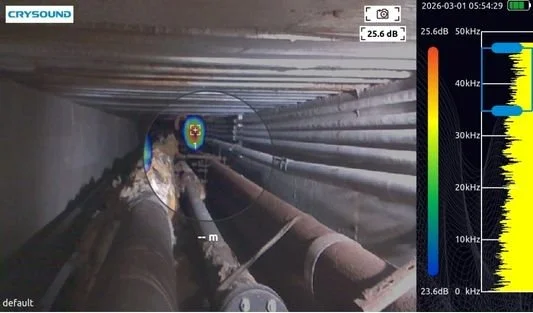
Ultrasonic acoustic imaging during system repressurization identified a localized 25.6 dB hotspot within the inspected tunnel.Inspection Findings
Remote visual inspection documented conditions throughout the accessible portion of the utility tunnel.
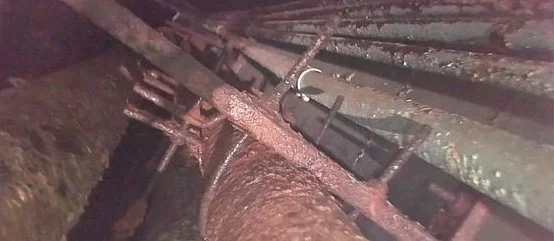
Remote inspection documented extensive corrosion across pipe supports, clamps and surrounding infrastructure.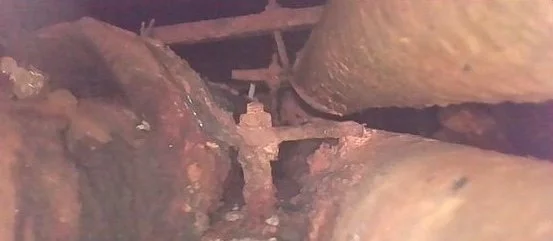
Remote inspection revealed heavy corrosion across valve hardware, joint interfaces and surrounding pipe surfaces.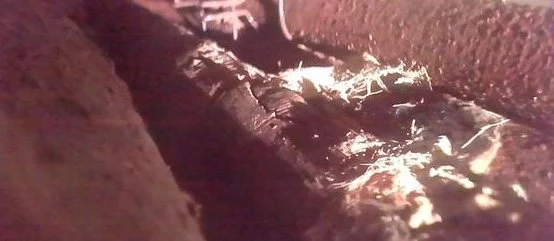
Potential leak area identified during remote inspection. Difficult Access Shouldn’t Mean Limited Visibility
Remote inspection technologies give infrastructure teams new ways to investigate complex and difficult-to-access environments.